Written by
Josya Hemrajani
Published on
July 17, 2026

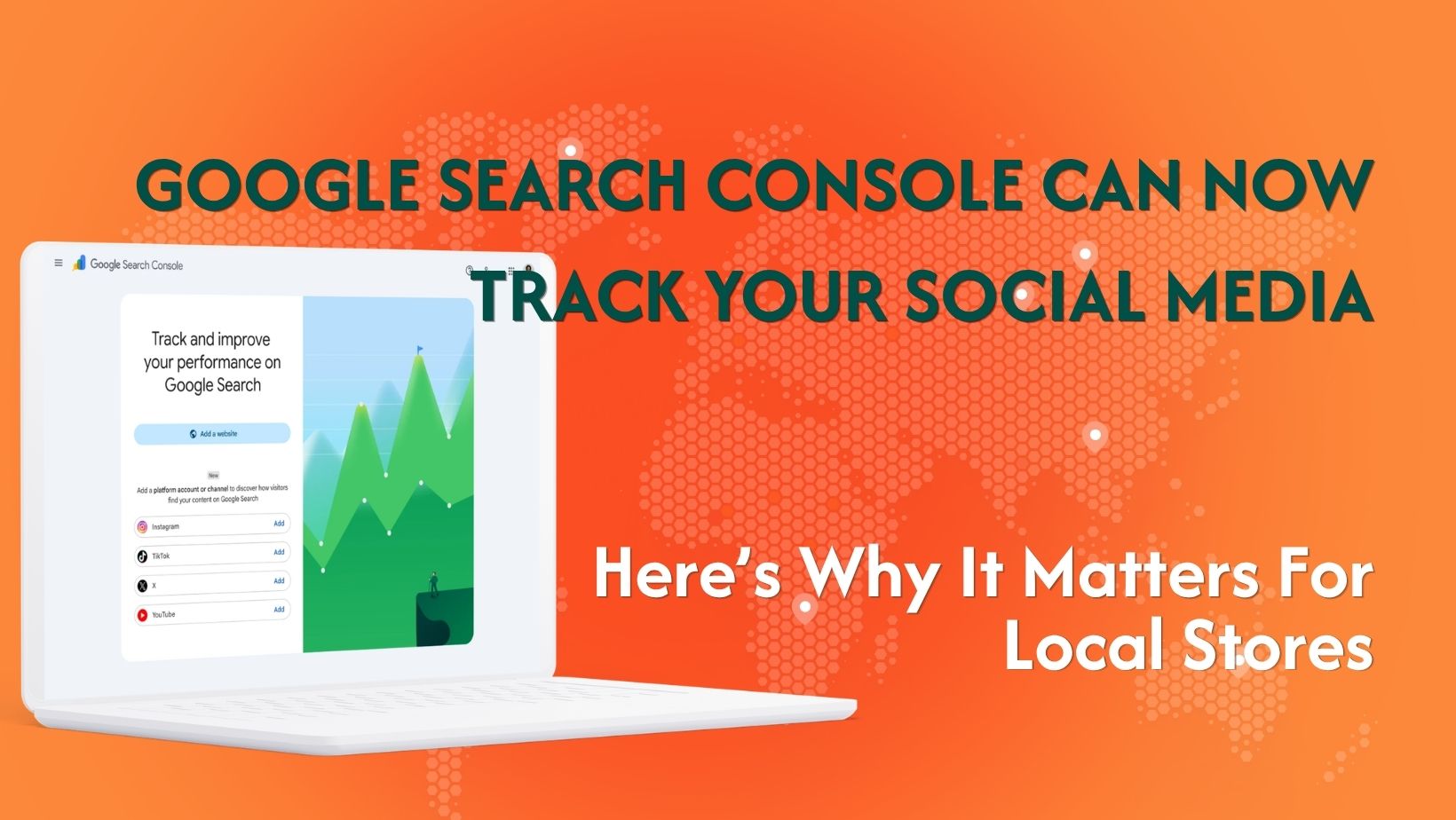

But wait, what is Google Search Console? Yeah, good question: Google Search Console (GSC) is essentially a free digital foot-traffic tracker that shows the exact search terms customers typed into Google before finding your website.
For multi-location brands, maintaining localised landing pages for 50, 500, or 5,000 storefronts has always been a battle (except for SocioLocal users, virtual hi-fi to you). But let's be honest: corporate-templated local website pages usually feel rigid, and about as exciting as watching paint dry!
Meanwhile, your individual franchise locations and local store managers are creating vibrant, fresh, and highly engaging content on their local Instagram and TikTok profiles, showing off the actual soul of your business.
For years, social media was treated as just a fun little add-on to the real website - meant only to rack up likes and comments inside its own little app silo. Your corporate SEO team tracked website performance via GSC, while local teams focused on in-app social engagement metrics. The connection between the two was completely broken, leaving local teams struggling to prove to headquarters what real-world business value their hard work actually generated.
AND THAT CHANGES NOW!
Because Google just shattered that barrier by introducing Platform Properties inside GSC
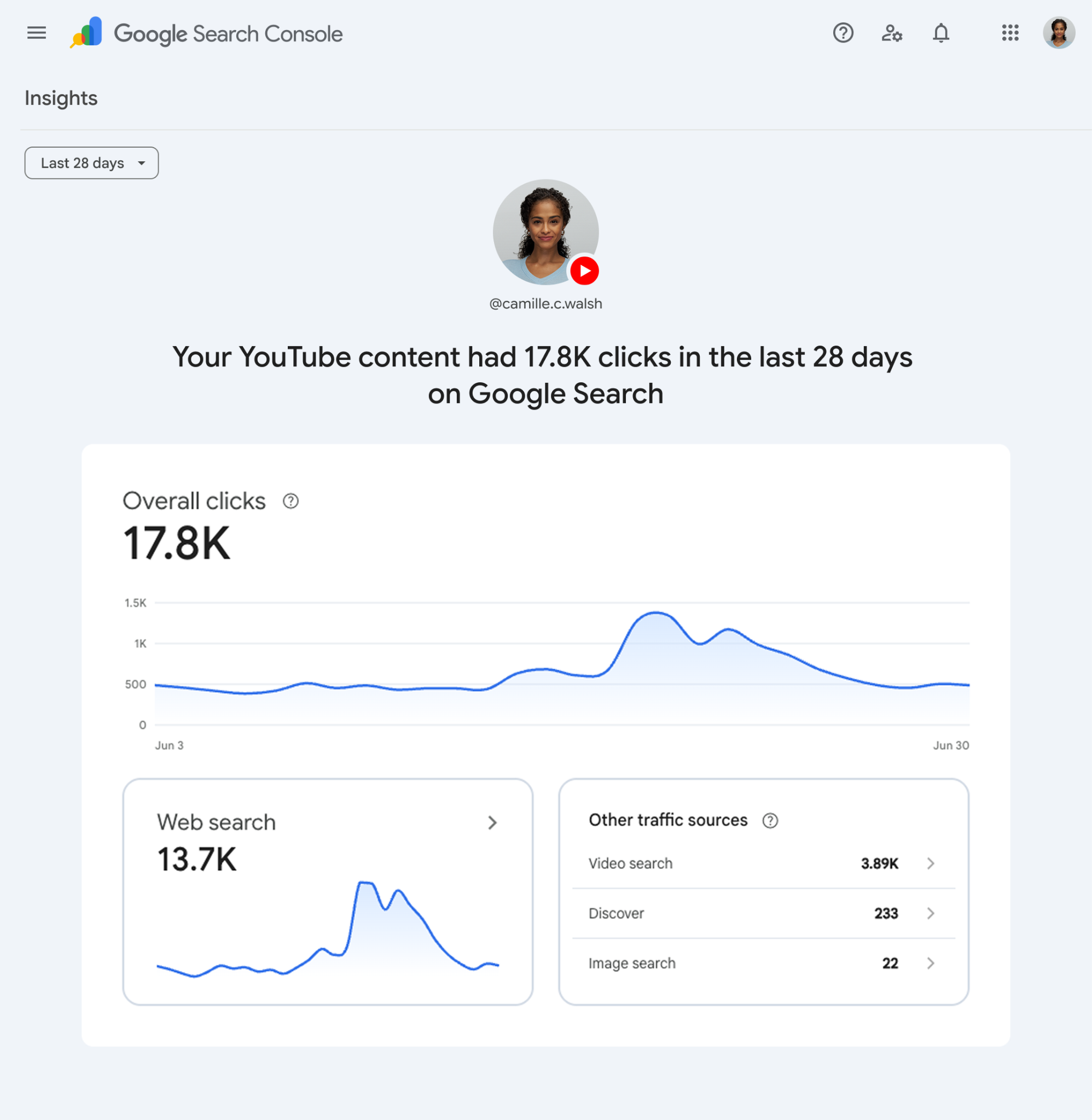
All that hard work your local teams have poured into building an Instagram, TikTok, X, and YouTube presence can finally be fully quantified. You can now hand corporate headquarters a report showing the exact external web ROI your local social pages are generating.
Want to know how to win local marketing and get more visibility through social? Contact SocioLocal for a personalised demo today!
Google didn't launch this feature out of the goodness of their heart; they did it because consumer behaviour has fundamentally transformed. The data proves that search is no longer a monopoly centred on traditional text-based web links:
Google recognised that if they wanted to keep searchers inside their ecosystem, they had to start crawling, indexing, and respecting social media profiles.
Google is explicitly extending GSC capabilities to platforms WITHOUT requiring a verified website. This completely levels the playing field for local store profiles that don't have a massive corporate website budget backing them up. Connecting them is very, very simple.
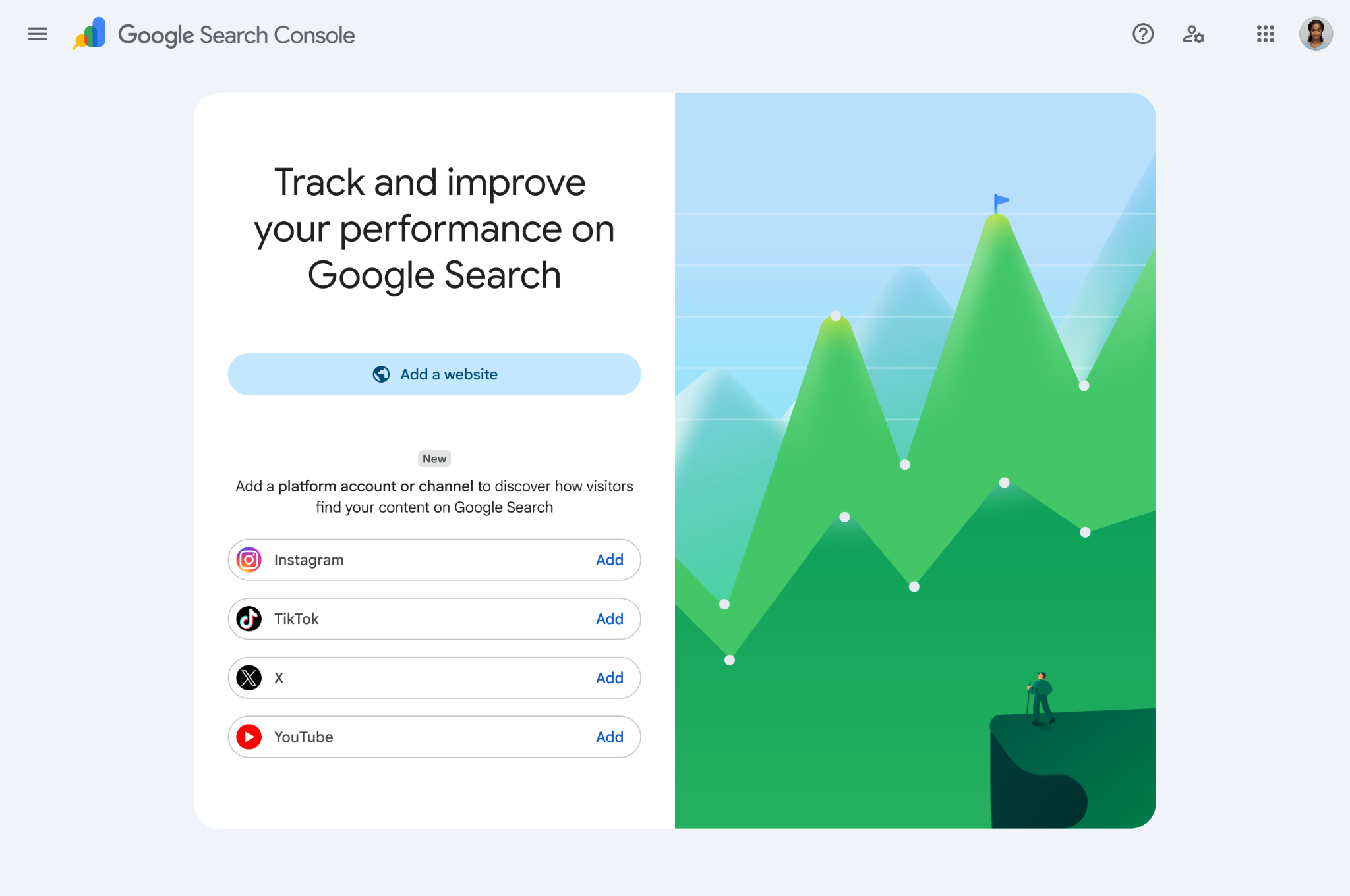
You will be able to see the exact Google search queries leading users straight to a specific store's Instagram profile or TikTok video shorts. If a customer searches for "best outdoor patio in [City Name]" and your local branch's Instagram Reel pops up on the Google results page, you will finally see the data to prove it.
Even more important to use such SocioLocal Tips to have a clear CTA on your Facebook profiles now more than ever!
As we have always seen across all our top clients, local store social accounts frequently boast way higher engagement and authenticity than a stale corporate landing page. Consumers don't want polished corporate graphics; they want to see real employees, local menu items, and real-time community events.
Because Google increasingly surfaces visual content directly inside Search and Discover results, your local managers' authentic content is actively ranking on Google. Platform Properties finally lets you measure the web ROI of that local, boots-on-the-ground content creation.
3. Creating a Data-Driven Blueprint for Franchisees
Multi-location brands often struggle to give franchisees clear direction on what to post. Through the reports provided by Platform Properties, you can pinpoint exactly what works with accuracy.
Want to know how to win local marketing and get more visibility through social? Contact SocioLocal to book your free demo.
To win in this new environment, multi-location brands must train their local teams to stop thinking of social media as just an app and start treating it like local search content:
As consumer search habits evolve, a local store's Instagram or TikTok profile is becoming just as important as its website for driving discovery.
With Platform Properties, Google is recognising that local discovery happens everywhere. The brands that succeed moving forward will stop obsessing over corporate web traffic alone and start optimising every single local profile to be discoverable wherever the consumer chooses to look.
SocioLocal is purpose-built to help multi-location brands scale authentic, search-optimised local content effortlessly from one central dashboard:
An Eddie Rocket’s study by SocioLocal showed that stores actively posting on social media through SocioConnect made nearly double the sales (£1,499.95) of those that didn't (£790). These results represent around 90% higher sales performance for stores that used social media. Read more on Why Local Social Is Today's Best Value Marketing Channel.
Across 30 SPAR and EUROSPAR locations, using SocioLocal saved store managers 320 hours of work while gaining over half a million in social reach. “The pilot was a huge success”, said Sara Murphy, Brand Marketing Manager at Henderson Group. Want to know how to win local marketing and get more visibility through social media? Contact SocioLocal to schedule your free demo today.
Currently, Search Console supports the following platforms: Instagram, TikTok, X, and YouTube.
Yes! That is exactly what makes this update a game-changer. You do not need a standalone website or a distinct subdomain to use platform properties.
No. Platform properties only show how your content performs on Google Search. They don’t track when people see your content on the platform itself (for example, they won’t show how many times your video appeared on TikTok). In-app analytics will still need to be checked inside your Meta Professional Dashboard.
Google has explicitly stated: "We’re rolling out this feature gradually, so it might not be available to everyone yet." Keep checking your sidebar property menu over the coming weeks!
No. Once you re-verify, you get access to the same report and you don't need to wait for data to accumulate. Your past tracking reports are safely stored on the dashboard.

